

Cold Email Automation: How to Build Sequences That Convert
What is Cold Email Automation and Why Does it Matter for Outreach?
In today's competitive sales landscape, merely sending a single cold email is rarely enough to capture a prospect's attention. The average professional receives dozens, if not hundreds, of emails daily. To cut through the noise and foster genuine interest, a sustained, personalized approach is essential. This is where cold email automation becomes indispensable.
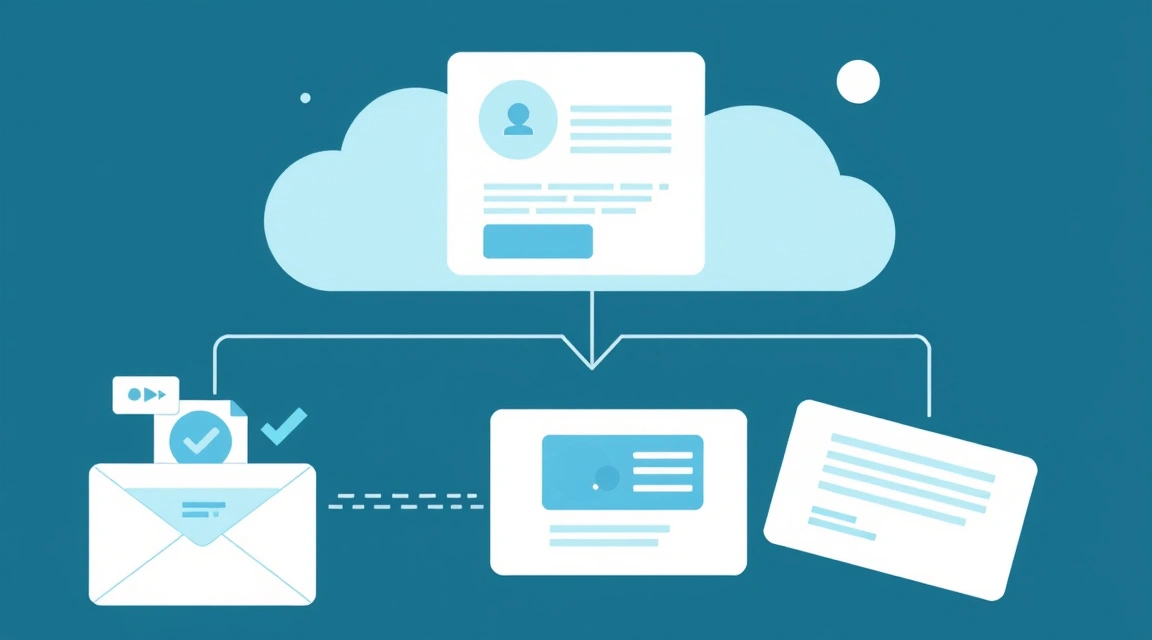
At its core, to automate cold email means setting up a predefined series of emails that are automatically sent to prospects based on specific triggers and timings. This isn't about mass blasting generic messages; it's about intelligent, scalable personalization. An effective cold email sequence builder allows sales and marketing teams to nurture prospects through multiple touchpoints, delivering relevant information at opportune moments without requiring constant manual oversight.
The primary benefit of integrating automated cold outreach into your strategy is efficiency. Imagine the time saved by not manually tracking every follow-up, identifying who replied, or remembering when to send the next message. Automation handles these tasks, freeing up your team to focus on high-value activities like engaging with qualified leads and closing deals. This consistency in follow-up can dramatically improve response rates, as studies show that 80% of sales require 5 follow-up calls after the meeting, and similar principles apply to email outreach.
Beyond efficiency, a well-structured cold email drip campaign ensures that no lead falls through the cracks. It provides a systematic way to educate prospects, address potential objections, and build trust over time. By delivering value consistently, you position your brand as a helpful resource rather than just another vendor.
How to Design Your Converting Cold Email Sequence Builder
Building a cold email sequence that converts requires more than just scheduling emails. It demands strategic planning, meticulous content creation, and an understanding of human psychology. Here's how to approach it:
1. Prospect Research and Segmentation: The Foundation of Personalization
Before writing a single email, deeply understand your target audience. Who are they? What are their pain points, goals, and challenges? What industry are they in? Tools like LinkedIn Sales Navigator, corporate websites, and industry reports can provide invaluable insights. Segment your prospects into highly specific groups based on shared characteristics (e.g., industry, company size, role, technology stack). This allows for hyper-personalization that feels genuinely tailored.
2. Crafting Compelling Email Stages: The Anatomy of a Sequence
A typical cold email sequence consists of 3-7 emails, each with a distinct purpose. While the exact number varies, a common structure might look like this:
- Email 1: The Introduction & Value Proposition (Goal: Hook)
Keep it concise. Immediately state why you're reaching out and the specific, tangible value you can offer. Focus on the prospect's problem, not your product. Personalize the opening line significantly (e.g., "Noticed you're tackling X at [Company Name]").
- Email 2: The Reiteration & Social Proof (Goal: Build Trust)
Sent 2-3 days after the first. Reiterate your value proposition from a slightly different angle. Introduce a relevant case study, a statistic, or a quote from a happy customer in a similar industry. This builds credibility.
- Email 3: The Educational Value & Problem-Solving (Goal: Educate)
Sent 4-5 days after the second. Offer a piece of valuable content (blog post, whitepaper, webinar) that helps them solve a problem related to your offering, without directly pushing a sale. This positions you as an expert.
- Email 4: The Objection Handling & Feature Highlight (Goal: Overcome Hurdles)
Sent 3-4 days later. Address a common objection or highlight a specific feature of your solution that directly solves a pain point you've identified. Keep it brief and focused.
- Email 5: The "Breakup" Email (Goal: Get a definitive answer)
Sent 5-7 days after the fourth. This is a final, polite attempt to get a response. State that you'll assume they're not interested if you don't hear back. Often, these emails have surprisingly high reply rates, even if it's a "no."
3. Timing and Frequency Best Practices
The timing of your emails is critical. Sending too frequently can annoy prospects, while waiting too long can lead to them forgetting you. General benchmarks suggest:
- **Initial Follow-up:** 2-3 business days after the first email.
- **Subsequent Follow-ups:** 4-7 business days between messages.
- **Optimal Sending Days:** Tuesdays, Wednesdays, and Thursdays often see higher engagement.
- **Optimal Sending Times:** Mid-morning (9 AM - 11 AM local time) and early afternoon (1 PM - 3 PM local time) are generally good.
4. Conditional Logic and Reply Detection: The Intelligence Layer
This is where a robust cold email sequence builder truly shines. Conditional logic allows your sequence to adapt to prospect behavior, ensuring your email automation outreach doesn't sound robotic:
- Reply Detection: Absolutely crucial. If a prospect replies to any email in your sequence, the automation must immediately stop. Continuing to send automated messages after a reply demonstrates a lack of attention and can damage your reputation.
- Open/Click Tracking: While not as definitive as a reply, opens and clicks can indicate interest. You might set up conditional paths: if a prospect clicks a link in Email 2, they could be moved to a more specific sequence or flagged for a sales call. If they haven't opened Email 1 after 5 days, a different, shorter follow-up might be triggered.
This dynamic adjustment is what transforms a simple drip campaign into a sophisticated, highly effective automated cold outreach strategy.
Need to validate your email list before sending?
Postigo offers free email validation, MX checking, and deliverability tools — no signup required.
Try Free Tools →Implementing Your Automated Cold Outreach Strategy with Postigo
To ensure your automated cold email sequences perform optimally, the technical setup and ongoing maintenance are just as important as the content itself. Postigo provides the tools to manage these critical aspects.
Essential Setup for Reliable Email Automation Outreach
Before launching any cold email campaign, ensure your sending infrastructure is impeccable:
- Sender Reputation: Your domain and IP reputation are paramount. Implement SPF, DKIM, and DMARC records correctly to authenticate your emails and prevent them from landing in spam folders. You can check your SPF records to ensure they are configured properly.
- Email Validation: Sending emails to invalid addresses leads to hard bounces, which severely damage your sender reputation. Use an email validation service to clean your lists before sending. Aim for a bounce rate below 2%.
- SMTP Configuration: A reliable SMTP service is the backbone of your email delivery. Whether you're using Gmail SMTP, Outlook 365 SMTP, Amazon SES, or SendGrid, ensure your SMTP settings are correctly configured for optimal deliverability.
- Warm-up: If you're using a new domain or IP, warm it up gradually by sending a small volume of emails and slowly increasing it over several weeks.
Sample Cold Email Template Structure
Here’s a basic structure for your first cold email, designed for personalization and clarity:
Subject: Quick question about [Prospect's Company] / Idea for [Pain Point]

Hi {{first_name}},

I noticed you're [specific observation about their role/company/recent achievement]. As someone working at [Your Company], we often help [similar companies/roles] with [specific problem].

Specifically, we've helped companies like yours [achieve specific benefit 1] and [achieve specific benefit 2] by [briefly mention your solution].

I have a quick idea regarding how you could potentially [desired outcome] at [Prospect's Company].

Would you be open to a brief 15-minute chat next week to explore this further?

Best,

{{your_name}}
{{your_title}}
{{your_company}}
{{your_website}}
Optimizing Your Cold Email Drip Campaign for Higher Conversions
Launching a cold email drip campaign is just the beginning. Continuous monitoring and optimization are essential for maximizing conversions. Here are key areas to focus on:
A/B Testing and Iteration
Never assume your first version is the best. A/B test everything:
- Subject Lines: Test different lengths, emojis, personalization, and benefit-driven vs. curiosity-driven lines.
- Call-to-Actions (CTAs): Experiment with different phrases ("Book a Demo," "Schedule a Chat," "Learn More," "What are your thoughts?").
- Email Body: Test different opening lines, value propositions, social proof, and overall length.
- Timing: Experiment with sending on different days of the week and at different times of the day.
Make one change at a time to accurately attribute performance improvements. Aim for statistically significant results before implementing changes across the board.
Monitoring Key Metrics for Cold Email Sequence Optimization
Track these metrics meticulously within your cold email automation platform to understand what’s working and what isn’t:
| Metric | Description | Good Benchmark | Why it Matters |
|---|---|---|---|
| Open Rate (%) | Percentage of recipients who opened your email. | 20-30% | Indicates subject line effectiveness and sender reputation. |
| Click-Through Rate (CTR) (%) | Percentage of recipients who clicked a link in your email. | 2-5% | Measures interest in your content/offer. |
| Reply Rate (%) | Percentage of recipients who responded to your email. | 5-10% | The ultimate indicator of engagement and interest. |
| Bounce Rate (%) | Percentage of emails that failed to deliver. | < 2% | Crucial for sender reputation; high bounces indicate poor list hygiene. |
| Unsubscribe Rate (%) | Percentage of recipients who opted out. | < 0.5% | High rates suggest irrelevant content or poor targeting. |
| Conversion Rate (%) | Percentage of replies that lead to a desired action (e.g., meeting booked, demo). | Varies widely | Measures the ultimate success of your sequence. |
Analyzing and Adapting
Regularly review your campaign performance. If your open rates are low, tweak your subject lines and segment your list further. If your reply rates are low, refine your value proposition and call-to-action. If your bounce rate is high, you need to revisit your email validation processes. Don't be afraid to pause a sequence that isn't performing and overhaul it. The goal is continuous improvement, leading to higher conversions and a stronger ROI for your email automation outreach efforts.
Key Takeaways
Effective cold email automation hinges on a strategic blend of deep personalization, intelligent multi-step sequences with conditional logic, and rigorous performance monitoring. Focus on delivering genuine value in each email, consistently validate your email lists, and relentlessly A/B test every element to continuously refine your outreach for maximum conversion rates.
Ready to launch your email campaign?
Start with 500 free emails. AI-powered personalization, SMTP rotation, and real-time analytics.
Start Free →Related Posts
Ready to scale your outreach?
Start sending personalized cold emails with AI-powered automation. Free trial, no credit card required.
Start Free Trial arrow_forward