

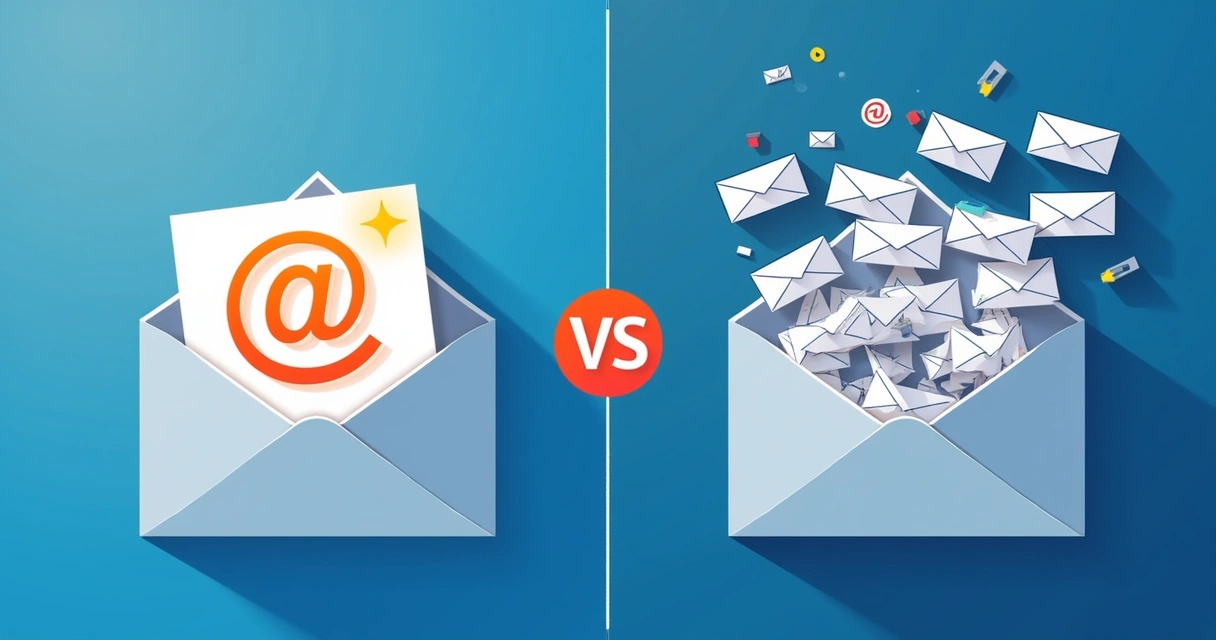
Cold Email vs Spam: What Is the Difference?
The distinction between cold email and spam is often blurred, leading to misconceptions and hesitancy in leveraging cold outreach for business growth. At its core, cold email is a legitimate, targeted outreach strategy to a prospect who has not previously interacted with your business but could genuinely benefit from your offering. Spam, conversely, is untargeted, unsolicited bulk messaging, often lacking relevance and sent without any regard for the recipient's interest or privacy, frequently violating anti-spam legislation. Understanding this fundamental difference is crucial for anyone looking to engage in effective and compliant email marketing and outreach.
Understanding Cold Email: The Art of Strategic Outreach
Cold email, when executed correctly, is a powerful tool for business development, lead generation, and relationship building. It’s not about sending mass messages to random email addresses; it’s about initiating a conversation with a carefully selected individual or organization that aligns with your ideal customer profile (ICP). This strategic approach transforms what might seem like an intrusion into a valuable connection, built on mutual potential benefit rather than a blunt sales pitch.
What Defines a Legitimate Cold Email?
- Targeted Audience: Legitimate cold emails are sent to specific individuals or companies identified through thorough research as potential prospects. This means their business, role, recent activities, or declared interests suggest a genuine need for or benefit from your product or service. The sender invests time to identify suitable recipients, ensuring a foundational level of relevance.
- Personalization: Effective cold emails go far beyond merely using the recipient's first name. They demonstrate a genuine understanding of the recipient's specific challenges, goals, recent achievements, or industry context. This often requires delving into their company's website, LinkedIn profile, recent news, or public statements to craft a message that resonates on a personal level.
- Value Proposition: The core of a legitimate cold email is to offer tangible value to the recipient. This could be a tailored solution to a known problem, a valuable resource that aids their business, an insightful perspective, or an introduction to a relevant connection. The focus is squarely on the recipient's potential gain, not just a blatant, self-serving sales pitch.
- Professionalism and Respect: The language used in a cold email is clear, concise, and respectful of the recipient's time and inbox. It avoids deceptive subject lines, pushy sales tactics, jargon, or irrelevant content. The tone is professional, establishing credibility and fostering trust from the outset.
- Clear, Low-Friction Call to Action (CTA): While aiming to initiate a conversation, a good cold email has a clear, low-commitment CTA. Examples include "Are you open to a brief chat next week about [specific topic]?" or "Would you be interested in a relevant case study that addresses [their challenge]?" The goal is to open a dialogue, not to demand an immediate purchase or a significant time commitment.
- Compliance with Regulations: Crucially, legitimate cold emails adhere to data protection and anti-spam regulations such as GDPR (General Data Protection Regulation), CAN-SPAM Act, and CASL (Canada's Anti-Spam Legislation). This involves ensuring a legal basis for processing data (like "legitimate interest" under GDPR) and always providing an easy, prominent way for the recipient to opt-out of future communications.
"Cold email isn't about interrupting; it's about initiating a relevant conversation with someone who stands to benefit. The difference lies in intent, targeting, and respect for the recipient's time and privacy." — Postigo Outreach Expert
The intent behind a cold email is to forge a new connection or open a new business opportunity, not to trick or inconvenience the recipient. It requires a thoughtful, strategic approach built on meticulous research and profound respect for the recipient's digital space.
Deconstructing Spam: Unwanted and Often Harmful Messaging
Spam, on the other hand, operates on an entirely different premise. It’s a crude numbers game, where senders blast messages to vast, untargeted lists, often acquired illicitly, hoping a minuscule fraction will respond. This approach disregards the recipient's consent, relevance, and often, their privacy and security, creating digital clutter and potential threats.
What Characterizes Spam?
- Untargeted Bulk Sending: Spam emails are sent indiscriminately to massive lists of email addresses, often scraped from websites, purchased from dubious sources, or generated through automated means, without any qualification or relevance checks. There's no effort to align the message with the recipient's actual needs or interests.
- Lack of Consent: Recipients of spam have typically not given any explicit or implied permission to be contacted by the sender. Their email address was simply acquired and added to a mass mailing list without their knowledge or consent, making the communication unsolicited by definition.
- Irrelevance and Generic Content: The content of spam is typically generic and has little to no relevance to the vast majority of recipients. It's a one-size-fits-all pitch designed for maximum breadth of reach, not depth of impact. The messaging rarely addresses specific pain points or offers personalized value.
- Deceptive Tactics and Misleading Information: Spam frequently employs misleading subject lines ("Re: Your Order," "Urgent Action Required," "You've Won!") to trick recipients into opening the email. The content itself might contain false promises, phishing attempts designed to steal credentials, malware distribution links, or outright scams promising quick riches or miracle cures.
- Absence or Obscurity of Opt-Out: Spammers often omit an unsubscribe link entirely or make it intentionally difficult to find, understand, or use. Even when present, clicking an unsubscribe link in a spam email can sometimes confirm to the sender that the email address is active, paradoxically leading to an increase in spam.
- Flagrant Violation of Regulations: Spam flagrantly violates anti-spam laws across jurisdictions, incurring severe legal and financial penalties for senders caught engaging in such practices. These violations are often intentional, banking on the difficulty of enforcement against anonymous or offshore operators.
- Malicious Intent: While some spam is merely annoying advertising, a significant portion is designed for malicious purposes such as phishing for sensitive information, distributing ransomware or viruses, facilitating identity theft, or spreading misinformation and propaganda.
Spam is more than just a nuisance; it's a security risk that clogs inboxes, wastes productivity, and erodes trust in email as a legitimate communication channel. It actively damages the reputation of legitimate email marketing efforts by associating all unsolicited messages with nefarious intent.

Cold Email vs. Spam: The Definitive Comparison
To crystallize the profound differences between legitimate cold email and harmful spam, let's look at a direct comparison of their key attributes. This table highlights how varying approaches to fundamental elements like consent, targeting, and intent shape whether an email is a valuable outreach or an unwanted intrusion.
| Feature | Cold Email | Spam |
|---|---|---|
| Consent & Legal Basis | Relies on "Legitimate Interest" (GDPR) or implied consent based on publicly available information and relevance (CAN-SPAM, CASL). Sender has a reasoned basis for contact. | No consent whatsoever. Email addresses often acquired through illicit means or scraped from the internet without permission. |
| Targeting & Personalization | Highly targeted to specific individuals based on extensive research. Personalized content addressing their unique context, challenges, or achievements. | Untargeted mass messaging sent to millions. Generic, templated content with little to no personalization, if any. |
| Relevance & Value | Offers clear, demonstrable value relevant to the recipient's role, company, or needs, providing a solution or insight. | Often irrelevant, self-promotional, or contains suspicious, unsolicited offers. Focuses purely on the sender's immediate gain. |
| Purpose & Intent | To initiate a professional conversation, build a relationship, or introduce a relevant solution that genuinely benefits the recipient. | To illicit a response for fraudulent purposes (phishing, scams), distribute malware, or push unwanted products/services in bulk, regardless of recipient interest. |
| Transparency & Honesty | Clear sender identification, honest and accurate subject lines, straightforward and truthful content. | Often uses deceptive subject lines, spoofed sender addresses, and misleading or fraudulent content to trick recipients. |
| Opt-Out Mechanism | Always provides a clear, easy-to-use unsubscribe link or an obvious way to decline further communication, and respects requests promptly. | Often lacks an unsubscribe option, or it's hidden/non-functional. Clicking it might sometimes confirm a live email address, leading to more spam. |
| Sender Reputation | Prioritizes maintaining a positive sender reputation through high engagement rates, low bounce rates, and minimal spam complaints. | Disregards sender reputation; often uses disposable domains, compromised accounts, or botnets. High complaint rates are common. |
| Legal Compliance | Strictly adheres to international and local anti-spam regulations and data protection laws. | Flagrantly violates anti-spam regulations, risking severe legal penalties, fines, and criminal charges. |
Navigating the Legal Landscape: Compliance is Key
The line between legitimate cold outreach and illegal spam is often precisely defined by regulatory frameworks governing electronic communications and data privacy. Businesses must possess a thorough understanding of and scrupulous compliance with these laws to avoid severe penalties, maintain deliverability, and protect their brand reputation.
Key Anti-Spam Regulations Globally
- CAN-SPAM Act (Controlling the Assault of Non-Solicited Pornography and Marketing Act) – United States:
The CAN-SPAM Act establishes requirements for commercial messages, gives recipients the right to have businesses stop emailing them, and spells out tough penalties for violations. While it doesn't require prior consent (opt-in) for commercial emails, it mandates:
- Accurate Header Information: The "From," "To," "Reply-To," and routing information must be accurate and identify the person or business initiating the message.
- No Deceptive Subject Lines: Subject lines must accurately reflect the content of the message.
- Disclosure of Advertisement: The email must clearly and conspicuously disclose that it is an advertisement or promotional message.
- Clear and Conspicuous Opt-Out: Every commercial email must include a clear and prominent mechanism for recipients to opt out of receiving future emails from the sender. This mechanism must be operational for at least 30 days after the email is sent.
- Prompt Opt-Out Honoring: Senders must honor opt-out requests within 10 business days.
- Physical Postal Address: All commercial emails must include a valid physical postal address of the sender.
- Responsibility for Third Parties: Even if another company sends your marketing emails, you can still be held legally responsible for compliance.
- GDPR (General Data Protection Regulation) – European Union/European Economic Area:
GDPR is arguably one of the most stringent data privacy laws, applicable to anyone processing personal data of EU/EEA residents, regardless of the sender's geographical location. For email marketing and cold outreach, it significantly raises the bar:
- Lawful Basis for Processing: GDPR requires a "lawful basis" for processing personal data, which includes sending emails. For B2C marketing, explicit consent is generally required. For B2B cold outreach, "Legitimate Interest" is often the most applicable basis, but it requires careful balancing of the sender's interests against the individual's rights and freedoms. This involves a Legitimate Interest Assessment (LIA).
- Transparency: Individuals must be informed about how their data is collected, used, and stored. This includes identifying the sender, the purpose of the email, and where their data came from.
- Individual Rights: GDPR grants individuals significant rights, including the right to access, rectify, erase ("right to be forgotten"), and object to processing (including direct marketing).
- Data Minimization: Only collect and use personal data that is strictly necessary for your stated purpose.
- Data Protection by Design and Default: Implement data protection principles throughout your operations.
- Severe Penalties: Non-compliance can lead to hefty fines up to €20 million or 4% of global annual turnover, whichever is higher.
- CASL (Canada’s Anti-Spam Legislation) – Canada:
CASL is globally recognized as one of the strictest anti-spam laws, imposing rigorous requirements for sending Commercial Electronic Messages (CEMs) to or from computers in Canada:
- Consent Requirement: CASL generally requires express or implied consent to send CEMs.
- Express Consent: This is clear, explicit permission from the recipient (e.g., ticking an unchecked box).
- Implied Consent: This can arise from an existing business relationship (e.g., a purchase in the last two years), an existing non-business relationship (e.g., membership in an organization), or if the recipient has conspicuously published their email address (e.g., on their company website) without a statement that they don't want to receive unsolicited messages, AND the message is relevant to their business role, functions, or duties.
- Identification Information: CEMs must clearly identify the sender and, if applicable, the person on whose behalf the message is sent.
- Functional Unsubscribe Mechanism: Every CEM must include a clear and prominent unsubscribe mechanism that is easy to use and takes effect within 10 business days.
- Application Scope: CASL applies to all CEMs with a Canadian connection, regardless of where the sender is located.
Ignoring these intricate regulations can lead to severe financial penalties, significant damage to brand reputation, and critical deliverability issues. Postigo helps users stay compliant by providing features like robust unsubscribe management, transparent data handling capabilities, and tools for highly targeted outreach, ensuring your campaigns align with global legal standards.
How to Ensure Your Cold Emails Are Not Spam (Actionable Strategies)
Crafting effective and compliant cold emails requires strategy, precision, and adherence to best practices. By following these actionable steps, you can ensure your outreach stands out as valuable and respected, not spammy.
1. Hyper-Target Your Prospect List with Precision
- Define Your Ideal Customer Profile (ICP): Before you even start drafting, clarify precisely who genuinely benefits from your product or service. This involves understanding their industry, company size, revenue, specific challenges, and the role of the decision-maker you're targeting.
- Detailed Research and Qualification: Use tools like LinkedIn Sales Navigator, corporate websites, industry news, and public databases to identify specific individuals (not just generic roles) whose needs align perfectly with your offering. Look for clear trigger events such as recent funding rounds, new hires in relevant positions, company expansion into new markets, or recent product launches that create specific pain points your solution addresses.
- Prioritize Quality Over Quantity: A smaller, highly relevant, and well-researched list of 50 prospects will consistently outperform a generic list of 5,000 in terms of engagement, conversion, and maintaining sender reputation. Focus your efforts where they will have the most impact.
2. Personalize Beyond the Basics
- Reference Specific Pain Points or Goals: Don't just insert a name. Demonstrate you've done your homework. For example, instead of "I noticed you're in tech," try "I noticed your company, [Company Name], recently expanded into [New Market], which often presents challenges with [Specific Challenge your solution addresses], particularly around scaling customer support."
- Mention Shared Connections or Interests: If applicable, reference a mutual connection, a recent industry event you both attended, an article they wrote, or a public statement they made. This instantly builds rapport and shows genuine interest.
- Craft a Custom Value Proposition: Explain precisely how your solution addresses *their* unique situation or directly helps them achieve *their* stated goals, rather than listing generic product features. Make the connection explicit and compelling.
3. Craft Compelling, Honest Subject Lines
- Be Clear and Concise, Not Deceptive: Your subject line should accurately reflect the email's content without resorting to clickbait or misleading phrases. The goal is to pique interest, not trick the recipient.
- Spark Curiosity and Relevance: Examples of effective subject lines include: "Idea for [Company Name] regarding [specific challenge]," "Quick thought on [Industry Trend] & [Their Company]," "Connecting about [Mutual Interest or Connection]," or "A quick question about [Their Role]."
- Integrate Personalization Naturally: Include their name or company name in the subject line if it feels natural and adds to the relevance, but avoid force-fitting it.
4. Focus on Delivering Value, Not Just a Sale
- Lead with Empathy and Understanding: Start by demonstrating an understanding of their world, their industry, and the challenges they likely face. Frame your message from their perspective.
- Offer Help or Insight First: Provide a piece of relevant information, a useful resource, an insightful perspective, or a solution to a problem you know they might have, before asking for anything in return. This establishes you as a helpful resource.
- Adopt a Low-Commitment Call to Action (CTA): Instead of pushing for an immediate sale, aim for a discovery call, a brief conversation, or an offer to send more relevant information (e.g., "Would you be open to a 15-minute chat next week?"). This reduces friction and makes the next step less daunting.
5. Maintain a Professional Tone and Flawless Execution
- Impeccable Grammar and Spelling: Proofread meticulously. Errors immediately undermine your credibility and can trigger spam filters. Use tools like Grammarly if necessary.
- Conciseness and Clarity: Get straight to the point. Respect the recipient's time by making your message easy to read and digest quickly. Eliminate jargon and superfluous words.
- Professional Design: Avoid overly salesy templates, flashy graphics, or excessive fonts and colors. A clean, text-based email that looks like it was personally typed often performs best, as it feels more personal and less like a mass marketing blast.
6. Always Provide a Clear and Functional Opt-Out Option
- Make it Easy to Find and Use: Place an unsubscribe link clearly in the footer of every email. It should be legible and easily clickable.
- Ensure Functionality: Test your unsubscribe link to ensure it works instantly and effectively removes the recipient from your mailing list for that specific campaign. This is a legal requirement and a fundamental aspect of ethical outreach.
- Respect Requests Promptly: Process all opt-out requests immediately and without argument. Failure to do so can lead to spam complaints and legal repercussions.
7. Manage Sending Frequency and Monitor Reputation
- Don't Overwhelm Your Prospects: Space out your emails strategically. Avoid sending multiple emails to the same prospect within a short period unless they have responded positively. A well-timed follow-up sequence is effective; incessant bombardment is not.
- Monitor Deliverability Metrics: Keep a close eye on your open rates, reply rates, bounce rates, and crucially, your spam complaint rates. High bounce rates or an uptick in spam complaints are clear signals that something in your strategy or execution needs adjustment.
- Warm Up New Domains/IPs: If you're using a new domain or IP address for cold outreach, gradually increase your sending volume over time to build a positive sender reputation with email service providers. This helps avoid your emails being flagged as suspicious by algorithms.
8. Leverage Postigo’s Features for Compliant and Effective Outreach
Postigo is specifically designed to empower you to execute highly effective and compliant cold email campaigns, ensuring your messages are delivered and well-received. Our platform offers a suite of features that directly address the challenge of avoiding spam filters, adhering to regulations, and maximizing engagement:
- Advanced Segmentation and List Management: Build hyper-targeted lists based on deep prospect data, firmographics, and behavioral triggers, ensuring your outreach is always relevant to the recipient's specific context.
- Robust Personalization Tools: Go beyond simple merge tags with dynamic content, custom fields, and conditional logic to craft truly unique and highly personalized messages that resonate with each individual prospect.
- Deliverability Optimization and Analytics: Utilize Postigo's tools and analytics to monitor your sender reputation, test email content before sending, and ensure your emails reach the inbox. We provide guidance and features for essential domain authentication (SPF, DKIM, DMARC) to boost trust.
- Automated Unsubscribe Management: Implement automated and compliant unsubscribe processes, ensuring recipients can easily opt out and their preferences are respected instantly, in line with global anti-spam laws.
- A/B Testing Capabilities: Experiment with different subject lines, body copy variations, and calls to action to continually optimize your campaigns for higher engagement, reply rates, and conversions, moving beyond mere open rates.
- Intuitive Sequence Builder: Create multi-stage follow-up sequences that are personalized and strategically timed, maintaining engagement and nurturing leads without being intrusive or overwhelming.
By using a dedicated platform like Postigo, you can streamline the process of sending personalized, compliant cold emails, transforming what might otherwise be perceived as spam into valuable business opportunities. Learn more about how to set up your first compliant cold email campaign with Postigo by visiting our guide on improving cold email deliverability or explore our resources on GDPR compliance for email marketers.
Conclusion: Embrace Strategic, Ethical Outreach
The core difference between cold email and spam lies in intent, targeting, personalization, and strict adherence to legal and ethical standards. Cold email, when done ethically and strategically, is a powerful and legitimate sales and marketing channel capable of opening new doors, fostering valuable business relationships, and driving significant growth. It respects the recipient's time and intelligence by offering genuine value and meticulously adhering to complex legal frameworks like CAN-SPAM, GDPR, and CASL.
Spam, on the other hand, is a wasteful, disrespectful, and often illegal practice that harms sender reputations, clogs inboxes with irrelevant noise, and poses significant security risks. By understanding these critical distinctions and diligently adopting best practices—leveraging advanced platforms like Postigo to ensure hyper-targeting, deep personalization, clear value delivery, and unwavering compliance—businesses can confidently engage in cold outreach that generates tangible results without ever crossing into the detrimental realm of spam. The ultimate goal is not merely to send emails, but to initiate meaningful, value-driven conversations that lead to sustainable growth and trusted partnerships.
Related Posts


Ready to scale your outreach?
Start sending personalized cold emails with AI-powered automation. Free trial, no credit card required.
Start Free Trial arrow_forward