

How to Personalize Cold Emails at Scale
Personalizing cold emails at scale is not just a desirable goal; it's a fundamental requirement for cutting through digital noise and achieving meaningful engagement in today's competitive outreach landscape. While the idea of individualizing thousands of emails might seem daunting, it is entirely achievable by leveraging strategic data collection, intelligent segmentation, and powerful automation tools designed to deliver relevant messages to the right prospects at the opportune moment. This approach transforms generic blasts into targeted conversations, significantly boosting open rates, reply rates, and ultimately, conversion rates.
Why Personalization is Non-Negotiable for Scalable Outreach
In an inbox flooded with messages, generic cold emails are increasingly ignored, deleted, or worse, marked as spam. Recipients are sophisticated; they can spot a mass email from a mile away. Personalization, even at scale, signals that you've done your homework, understand their context, and are not simply pitching to anyone with an email address. This creates an immediate sense of relevance and trust, making the recipient more likely to open, read, and respond.
- Higher Open Rates: Subject lines that incorporate personalized elements (company name, industry, a specific problem) stand out.
- Increased Reply Rates: Messages tailored to a prospect's specific pain points or goals resonate more deeply, prompting a response.
- Improved Deliverability: Engaging content with higher interaction rates can positively influence your sender reputation and help you bypass spam filters.
- Stronger Relationships: Even a cold email can begin to build rapport if it feels like a genuine, one-to-one communication.
- Enhanced Brand Perception: A personalized approach positions your brand as thoughtful and customer-centric, rather than transactional.
The Foundation: Defining Your Ideal Customer Profile (ICP) and Buyer Personas
Before you can personalize, you must know who you are personalizing for. Attempting to personalize for everyone is akin to personalizing for no one. A clear understanding of your Ideal Customer Profile (ICP) and detailed buyer personas forms the bedrock of any successful scalable personalization strategy.
Defining Your Ideal Customer Profile (ICP)
Your ICP describes the type of company that would benefit most from your product or service and, in turn, provide the most value to your business. It's about firmographics and company-level attributes.
- Industry: Which sectors gain the most from your solution?
- Company Size: Revenue, employee count, number of locations.
- Location: Geographic region, country, specific cities.
- Technology Stack: What tools do they already use (and are they compatible or complementary to yours)?
- Growth Stage: Are they startups, established enterprises, or rapidly scaling companies?
- Budget: What is their capacity for investment?
- Pain Points/Challenges: What common problems do companies in your ICP face that your product solves?
For more detailed guidance, see our post on Defining Your Ideal Customer Profile.
Creating Detailed Buyer Personas
Once you have your ICP, you need to identify the specific individuals within those companies who make purchasing decisions or influence them. Buyer personas delve into the individual roles, responsibilities, goals, and challenges.
- Role/Job Title: Who are you trying to reach (e.g., Head of Sales, Marketing Director, CEO)?
- Responsibilities: What are their day-to-day tasks and key performance indicators (KPIs)?
- Goals & Aspirations: What are they trying to achieve in their role, department, or company?
- Pain Points & Frustrations: What keeps them up at night? What obstacles do they face?
- Information Sources: Where do they get their industry news, advice, or solutions (blogs, LinkedIn, conferences)?
- Objections: What common hesitations might they have when considering a solution like yours?
By understanding both the company (ICP) and the individual (persona), you can tailor your messaging with precision.
Data Collection: The Engine of Personalization at Scale
Effective personalization hinges on access to relevant, accurate data about your prospects. This data goes beyond just a name and email address; it includes firmographic, technographic, and psychographic insights. Collecting this data systematically is critical for scaling personalization.
Public Sources
A wealth of information is publicly available and can be leveraged for personalization.
- LinkedIn: Invaluable for roles, responsibilities, company news, shared connections, and recent activity. Sales Navigator is a powerful tool here.
- Company Websites: Provides mission statements, "About Us" sections, careers pages (revealing growth areas), press releases, and product information.
- News & Industry Publications: Look for recent funding rounds, mergers, product launches, executive changes, or mentions of industry-specific challenges.
- Crunchbase/SimilarWeb: Offers insights into funding, company growth, tech stack, and traffic analytics.
- Glassdoor/G2 Crowd: Employee reviews can sometimes reveal internal culture or specific pain points.
- Blogs & Social Media: Content they've published or engaged with can highlight their priorities and interests.
Third-Party Data Providers
For scaling data collection, specialized providers can enrich your existing lead lists.
- Data Enrichment Tools: Services like Clearbit, ZoomInfo, Hunter.io, or Lusha can take a basic email or company name and append extensive firmographic and technographic data.
- Technographic Data: Platforms like BuiltWith identify the technologies a company uses, allowing you to tailor messages based on compatibility or integration.
When using third-party data, always prioritize accuracy, ethical sourcing, and compliance with data privacy regulations (e.g., GDPR, CCPA).
CRM & Existing Customer Data
If you're targeting lookalike audiences, leverage insights from your current customer base. What common characteristics, pain points, or use cases do your most successful customers share?
Manual vs. Automated Scraping and Research
While manual research allows for deep, highly specific personalization, it doesn't scale well. A hybrid approach is often best:
| Method | Pros | Cons | Best For |
|---|---|---|---|
| Manual Research | Highly specific, deep insights, allows for unique angles. | Time-consuming, expensive at scale. | High-value accounts, very targeted campaigns. |
| Automated Scraping/Enrichment | Scalable, fast, cost-effective for large lists. | Less nuanced, potential for inaccuracies, relies on tool quality. | Broad campaigns within a well-defined ICP, initial list building. |
Segmentation: Grouping for Smarter Personalization
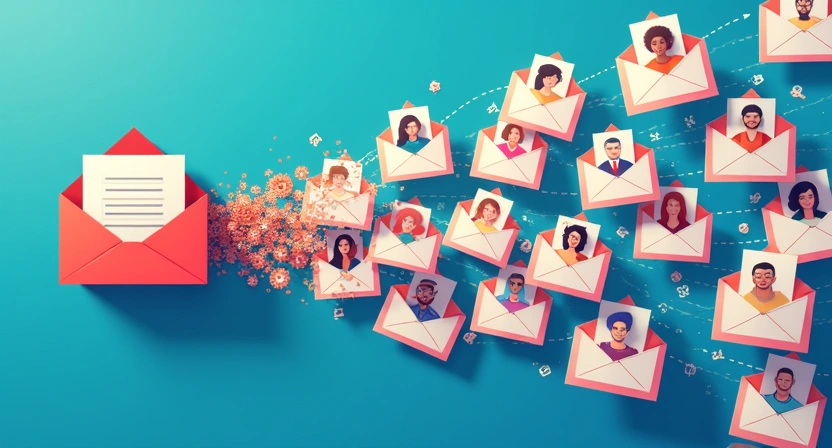
Once you've collected data, the next step is to segment your prospects into relevant groups. Segmentation allows you to apply different levels and types of personalization, ensuring your messages are always appropriate for the specific audience receiving them.
Demographic Segmentation
Based on basic firmographic and individual attributes.
- Industry: Tailor examples and case studies to their specific sector (e.g., "For SaaS companies like yours...").
- Company Size: Different challenges for startups vs. enterprises (e.g., "Helping growing teams of 50+...").
- Role/Job Title: Address their specific responsibilities and KPIs (e.g., "As a Marketing Director, you're likely focused on lead generation...").
- Geography: Relevant for location-specific offers or language considerations.
Psychographic Segmentation
Based on their motivations, pain points, goals, and challenges.
- Pain Point: Group prospects facing similar challenges (e.g., "Struggling with lead attribution?" or "Your sales team spending too much time on manual data entry?").
- Goals: Address their aspirations (e.g., "Aiming to reduce customer churn by 15% this quarter?").
- Technographic Match: Segment by companies using a particular tech stack or lacking one that your solution complements.
Behavioral Segmentation (If Applicable)
While often more relevant for nurture campaigns, some behavioral data can be gleaned for cold outreach.
- Website Visits: If a prospect visited a specific product page or pricing page.
- Content Engagement: If they've downloaded a whitepaper or attended a webinar (perhaps through a partner or industry event).
Crafting Personalized Content Templates with Postigo
This is where the rubber meets the road. Postigo's platform allows you to create flexible email templates that dynamically pull in prospect-specific data. This moves beyond simple name personalization to truly contextualized messaging.
Dynamic Fields Beyond Basic Placeholders
Don't just use `{{first_name}}`. Leverage all the data you've collected.
Common Dynamic Fields:
{{first_name}}{{company_name}}{{role}}{{industry}}{{city}}{{website}}
Custom Fields: Postigo allows you to create custom fields for unique data points relevant to your product. Imagine fields like:
{{pain_point_1}}(e.g., "manual data entry," "low lead conversion"){{recent_achievement}}(e.g., "recent funding round," "new product launch"){{competitor_used}}
Leveraging Conditional Logic (IF/THEN Statements)
This is a powerful feature for true scale personalization. Conditional logic allows you to include or exclude entire sentences, paragraphs, or even CTAs based on whether a certain data field is present or matches a specific value.
Example Scenario: You want to mention a specific benefit only if the prospect is from a particular industry, or offer a different case study based on their company size.
Hypothetical Postigo Code Snippet:
Hi {{first_name}},

I noticed {{company_name}} is in the {{industry}} sector.

{% if industry == "SaaS" %}
We've helped SaaS companies like yours [mention specific SaaS benefit or case study].
{% elif company_size > 500 %}
For large enterprises with over 500 employees, our solution provides [mention enterprise-specific benefit].
{% else %}
Many businesses in your position are struggling with {{pain_point_1}}.
{% endif %}

My team at Postigo specializes in helping companies like yours [your value proposition].

Best,
[Your Name]
This snippet demonstrates how you can create a single email template that intelligently adapts its message for different segments without manual intervention.
Personalizing the Subject Line
The subject line is your email's gatekeeper. Personalization here can dramatically improve open rates. For more insights, check out our guide on Crafting Cold Email Subject Lines That Get Opened.
{{company_name}}& Your Solution- Question about
{{industry}}challenges? - Quick idea for
{{first_name}}at{{company_name}} - Your thoughts on
{{recent_achievement}}?
Personalizing the Opening Line (The "Why You, Why Now" Approach)
The first sentence is crucial. It needs to immediately establish relevance. This is where your deep research and custom fields shine.
- "Saw that {{company_name}} recently [achieved X / announced Y]. Congratulations!"
- "Noticed your role as {{role}} at {{company_name}} likely involves [pain point/goal]."
- "Based on {{company_name}}'s focus on {{industry}} and recent growth, I thought you might be interested in..."
- "Knowing that {{company_name}} uses {{competitor_tech_stack}}, I wanted to share how we integrate seamlessly to solve [specific problem]."
Personalizing the Body Content
The main body of your email should connect your solution to their specific needs. Use custom fields to mention:
- Relevant Pain Points: "Many {{role}}s in the {{industry}} sector struggle with {{pain_point_1}}."
- Specific Goals: "If you're aiming to {{goal}}, our platform can help by..."
- Case Studies/Examples: Refer to a successful client in their industry or with similar challenges.
Personalizing the Call to Action (CTA)
Even your CTA can be personalized.
- Instead of "Book a demo," try "Would you be open to a 15-minute chat to discuss how we could help {{company_name}} with {{pain_point_1}}?"
- "Does finding a solution for {{challenge}} resonate with your priorities for this quarter?"
Automation Tools: The "At Scale" Part
Personalization at scale is impossible without robust automation. Platforms like Postigo are built precisely for this, enabling you to manage campaigns, personalize messages, and track performance efficiently.
CRM Integration
Seamless integration with your CRM (e.g., Salesforce, HubSpot) is vital. This allows you to automatically pull prospect data into Postigo for personalization and push engagement data back to your CRM for a holistic view of the customer journey. This eliminates manual data entry and ensures your sales team always has the most up-to-date information.
Learn more about the benefits of CRM Integration for Email Outreach.
Email Sequencing & Drip Campaigns
Postigo enables you to build multi-step email sequences where each follow-up email can also be personalized based on previous engagement or new data. If a prospect doesn't open the first email, the second might offer a different angle or case study, again leveraging dynamic fields.
A/B Testing for Personalization Elements
To continuously optimize your personalization strategy, A/B testing is indispensable. Test different personalized subject lines, opening lines, value propositions, or CTAs to see what resonates most with your various segments. Postigo's analytics will help you identify winning formulas.
Discover best practices for A/B Testing Your Cold Emails.
AI-Powered Personalization (Emerging Trend)
While still evolving, AI is beginning to play a role in advanced personalization by analyzing vast amounts of data to suggest optimal messaging, subject lines, or even predict the best time to send an email for a specific recipient. As platforms integrate more AI, the ability to personalize at an even deeper level will grow.
Best Practices for Ethical & Effective Personalization
Don't Be Creepy: The Line Between Personalization and Invasion
There's a fine line between impressive personalization and unsettling intrusion. Avoid referencing overly private information. Stick to professional, publicly available, or contextually relevant data. Focus on how you can help them professionally, not personal details.
Focus on Value, Not Just Data Insertion
Simply inserting a name or company is not true personalization. The goal is to make the email valuable to the recipient by showing you understand their challenges and have a relevant solution. The personalization fields are merely tools to achieve that deeper relevance.
Test, Analyze, Iterate
Personalization is not a set-it-and-forget-it strategy. Continuously monitor your open rates, reply rates, and conversion rates for different segments and personalization variables. What works for one ICP might not work for another. Be prepared to adapt your approach based on data.
Maintain Data Hygiene
Outdated or incorrect data leads to embarrassing mistakes and damages your credibility. Regularly clean and update your lead lists. Ensure your data sources are reliable and your custom fields are populated accurately.
Advanced Strategies for Hyper-Personalization
Multi-Channel Personalization
Extend your personalization beyond email. If you're engaging on LinkedIn, reference something from your email or vice versa. This creates a cohesive, multi-touch experience that feels less like a series of discrete messages and more like an ongoing conversation.
Personalizing Based on Triggers
Automate outreach based on specific events or triggers relevant to your ICP:
- Funding Rounds: Congratulate them on recent funding and suggest how your solution can help them scale or invest new capital effectively.
- New Hires: If a company hires a new Head of Sales, they might be looking for tools to empower their new leader.
- Product Launches: Tailor your message to complement or enhance their new offering.
Conclusion
Personalizing cold emails at scale is no longer a luxury but a strategic imperative for any business serious about effective outreach. By systematically defining your ICP and buyer personas, leveraging diverse data sources, segmenting your audience intelligently, and utilizing powerful automation platforms like Postigo with dynamic fields and conditional logic, you can transform generic blasts into highly targeted, relevant conversations. This approach not only boosts engagement metrics but also builds a stronger foundation for meaningful business relationships, ultimately driving higher conversion rates and sustainable growth.
Related Posts

Ready to scale your outreach?
Start sending personalized cold emails with AI-powered automation. Free trial, no credit card required.
Start Free Trial arrow_forward