

How to Write a Follow-Up Email That Gets Responses
Crafting a follow-up email that consistently elicits a response is less about luck and more about strategic intent, value delivery, and precise timing. The most effective follow-ups are not mere reminders; they re-engage the recipient by offering fresh perspective, relevant information, or a clear, low-friction path forward, demonstrating genuine respect for their time and inbox. Success hinges on a thoughtful approach that prioritizes personalization, provides new value with each touchpoint, and maintains a professional, problem-solving tone.
Why Follow-Up Emails Are Critical (And Why Many Fail)
In a world of overflowing inboxes and constant digital noise, a single email rarely captures full attention. Statistics consistently show that a significant percentage of deals are closed only after multiple touchpoints. Yet, many professionals hesitate to follow up, fearing they might be perceived as annoying or pushy.
The reality is, most initial outreach attempts don't receive a response for benign reasons: the recipient was busy, overlooked it, or simply wasn't ready to engage at that exact moment. A well-crafted follow-up acknowledges these possibilities and provides a convenient second, third, or even fifth chance for connection.
Common Pitfalls in Follow-Up Emails:
- Lack of New Value: Simply stating "bumping this to the top of your inbox" offers nothing new and can be irritating.
- Generic Content: Sending the same template to everyone signals a lack of genuine interest in the recipient's specific needs.
- Poor Timing or Frequency: Following up too quickly can seem aggressive; waiting too long can mean the opportunity cools.
- Unclear Call to Action (CTA): Ambiguous requests leave recipients unsure of the next step.
- Overly Salesy Tone: Focusing solely on closing a deal rather than solving a problem often pushes recipients away.
- No Context: Failing to reference previous communication or the purpose of the initial outreach forces the recipient to recall the details.
Overcoming these challenges requires a deliberate strategy that transforms a generic reminder into a valuable, response-driving message.
The Anatomy of an Effective Follow-Up Email
Each element of your follow-up email plays a role in its success. Optimizing these components significantly increases your chances of getting a reply.
1. The Subject Line: Your Gateway to the Inbox
The subject line is perhaps the most critical component, as it determines whether your email gets opened. Effective follow-up subject lines are:
- Contextual: Reference the previous interaction or email.
- Concise: Get straight to the point.
- Benefit-Oriented: Hint at the value inside.
- Personalized: Include the recipient's name or company name where appropriate.
- Intriguing: Spark curiosity without being clickbait.
Subject Line Strategies & Examples:
| Strategy | Description | Example Subject Lines |
|---|---|---|
| Reference Previous Email | Clearly link to your last message. | Re: Our chat about [Project Name] Following up on our email regarding [Topic] Your thoughts on [Previous Email Subject]? |
| Add New Value/Insight | Highlight a new piece of information relevant to them. | An idea for [Company Name]'s [Challenge] Regarding [Topic] + new insights Quick thought on [Their Goal] |
| Question-Based | Pose a direct, low-commitment question. | Quick question about [Topic/Their Role] Still thinking about [Pain Point]? Did you get a chance to review [Proposal]? |
| Direct & Professional | Clear, no-nonsense approach. | Checking in: [Meeting Topic] Next steps for [Project Name] Following Up: [Your Company] & [Their Company] |
For more strategies on crafting compelling subject lines, explore our guide on mastering cold email subject lines.
2. The Opening: Re-establish Context Immediately
Don't make your recipient search for context. Remind them who you are and why you're emailing again, quickly and respectfully.
"I hope this email finds you well. I'm following up on my previous email from [Date] regarding [Briefly mention topic/value proposition]."
"Great connecting with you at [Event Name] / on [Date]. I promised to send over [Resource/Information], which you can find below."
3. The Body: Deliver Value, Keep it Concise
This is where you differentiate your follow-up from a generic nudge. Every follow-up should offer something new, reinforce value, or address potential unspoken concerns.
- Provide New Information or Resource: Share a relevant case study, a helpful blog post, an industry trend, or a new feature that directly addresses their potential needs.
- Reiterate Value Proposition: Briefly remind them of the core benefit you offer, perhaps from a slightly different angle.
- Address Potential Obstacles: If you anticipate common objections (e.g., budget, time), briefly touch upon how your solution can mitigate these.
- Ask a Specific, Engaging Question: Encourage interaction beyond a simple yes/no.
- Keep it Brief: Respect their time. Aim for conciseness without sacrificing clarity or value.
4. The Call to Action (CTA): Clear, Single, and Low-Friction
A strong follow-up has one clear objective. Avoid multiple CTAs, which can overwhelm and confuse. Make the next step as easy as possible.
Effective CTA Examples:
- "Would you be open to a brief 15-minute call next week to discuss this further?"
- "If you have 5 minutes, I'd love to get your initial thoughts on the proposal I sent."
- "Let me know if you'd like me to send over a quick demo video tailored to [Their Company's Specific Need]."
- "Are you free for a quick chat on Tuesday or Wednesday afternoon?"
For a deeper dive into crafting effective CTAs, see our article on crafting compelling CTAs for email marketing.
5. The Signature: Professional & Informative
Your signature should be professional, clear, and include essential contact information, reinforcing credibility.
Best regards,

[Your Name]
[Your Title]
[Your Company]
[Your Phone Number (Optional)]
[Link to Your Website/LinkedIn Profile]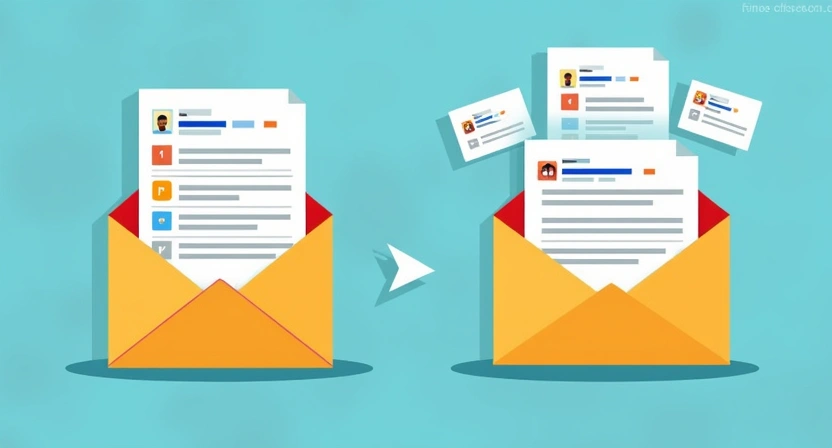
Key Strategies for Maximizing Follow-Up Success
1. Personalization is Non-Negotiable
Generic follow-ups rarely yield results. Personalization goes beyond just using their first name; it means demonstrating you understand their business, role, and challenges.
- Research: Look at their company's recent news, LinkedIn posts, or industry trends that might impact them.
- Reference Specifics: Mention details from your previous conversation or their company's public information.
- Tailor Value: Explain how your solution specifically addresses a pain point *they* likely face.
For more insights on making your outreach truly stand out, explore the power of personalization in email.
2. Provide New Value with Each Touchpoint
This is arguably the most crucial strategy. Each follow-up should bring something new to the table, making it worthwhile for the recipient to open and read. This could be:
- A relevant article or blog post you recently published.
- A case study of a similar company you helped.
- An insight into an industry trend that might affect them.
- A new feature or update to your product/service.
- A common question or objection addressed proactively.
- A link to a helpful tool or resource.
3. Vary Your Approach and Angles
Don't send the same message repeatedly with just a changed subject line. Experiment with different angles:
- The Educational Angle: Share knowledge or insights.
- The Problem-Solving Angle: Focus on a specific challenge and your solution.
- The Social Proof Angle: Share a testimonial or statistic.
- The Benefit-Driven Angle: Reiterate a key advantage they might gain.
- The Question-Driven Angle: Ask an open-ended question to spark dialogue.
4. Master the Timing and Cadence
The ideal follow-up sequence varies by industry, context, and recipient. However, some general guidelines apply:
- Initial Follow-Up (24-48 hours after initial email): If no response, a gentle reminder that adds a quick piece of value.
- Second Follow-Up (3-5 days later): A different angle, perhaps addressing a common objection or sharing a relevant resource.
- Third Follow-Up (5-7 days later): Focus on a different benefit or a concise case study.
- Further Follow-Ups (weekly or bi-weekly): These should be increasingly value-driven, nurturing the lead rather than hard-selling.
- The "Breakup" Email (typically after 5-7 attempts over 3-4 weeks): A final, respectful email to gauge interest one last time before moving on.
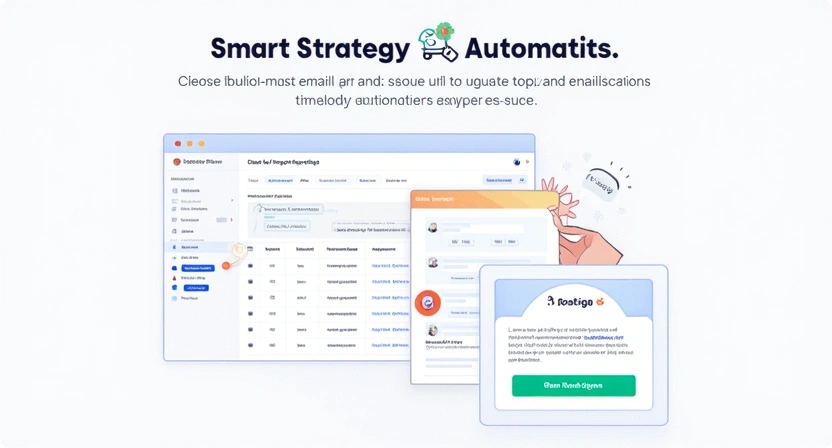
Automating your follow-up sequences with a platform like Postigo can help you maintain optimal cadence without manual effort, ensuring consistency and timely delivery. Learn more about creating effective sequences in our guide on effective email sequences for sales.
5. Know When to Stop (The Graceful Exit)
While persistence is key, there comes a point where continued outreach can become counterproductive. A respectful "breakup" email can sometimes prompt a response where previous attempts failed, or at least provide closure.
If you've sent 5-7 follow-ups over several weeks without a response, it's often best to pause. You can always re-engage them later with a new campaign or a different approach.
Types of Follow-Up Emails (with Examples)
Here are common scenarios and how to structure your follow-up:
1. After No Response to Initial Outreach
This is the most common scenario. Your goal is to gently remind them, re-state value, and offer a low-friction next step.
Subject: Re: An idea for [Company Name]'s [Pain Point]Hi [Recipient Name],
Hope you had a productive week.
I sent an email last [Day of week you sent initial email] about how [Your Company] helps companies like [Their Company] streamline their [Specific Process] and achieve [Specific Benefit].
I thought this recent article on "[Article Title]" might be relevant to your work on [Their Project/Role], as it discusses a challenge similar to what we help solve.
Would you be open to a quick 10-minute chat next week to see if any of these insights resonate?
Best regards,
[Your Name]
2. After a Meeting or Call
This follow-up reinforces key takeaways, summarizes next steps, and keeps the momentum going.
Subject: Following Up: Our Discussion on [Meeting Topic]Hi [Recipient Name],
It was a pleasure speaking with you today about [Key Point Discussed] and how [Your Solution] could potentially address [Their Challenge].
As discussed, here are the key takeaways and next steps:
- [Key Takeaway 1, e.g., Confirmed need for X]
- [Key Takeaway 2, e.g., Agreed on criteria for success]
I'll be sending over the [Requested Document/Proposal] by [Date]. In the meantime, please feel free to reach out if any questions arise.
Looking forward to our next steps,
[Your Name]
3. After Sending a Proposal or Quote
Check in, offer clarification, and gently prompt a decision without being pushy.
Subject: Checking In: Proposal for [Project Name]Hi [Recipient Name],
Hope you're having a good week.
I'm just checking in to see if you had a chance to review the proposal I sent on [Date] for [Project Name].
I wanted to see if you had any initial questions or if there's anything I can clarify for you regarding [Specific Section, e.g., the scope of work or pricing structure].
Let me know if you'd like to schedule a quick call to walk through it together.
Best,
[Your Name]
4. After an Event or Webinar
Reference your interaction or shared interest, and offer further relevant resources.
Subject: Great connecting at [Event Name] / Thoughts on [Webinar Topic]Hi [Recipient Name],
It was great briefly chatting with you at [Event Name] yesterday about [Topic you discussed].
You mentioned you were particularly interested in [Specific challenge/topic]. I thought you might find this resource helpful: [Resource Title].
If you'd like to dive deeper into how [Your Company] helps with [Challenge], I'm happy to schedule a quick 15-minute call.
Best regards,
[Your Name]
5. The "Breakup" Email
This is a final, respectful attempt to get a response, often by creating a sense of finality or even FOMO (Fear of Missing Out).
Subject: Closing the loop on [Project/Topic]Hi [Recipient Name],
I've reached out a few times regarding [Original Topic/Offer] and haven't heard back, which I completely understand — you're likely very busy!
I'll assume for now that [Your Solution] isn't a priority for [Their Company] at this time, and I'll stop reaching out.
However, if you do find yourself needing support with [Specific Pain Point] in the future, or if my initial timing was just off, please don't hesitate to reply to this email.
Wishing you all the best,
[Your Name]
Optimizing Your Follow-Up Workflow with Postigo
Managing multiple follow-up sequences manually can be time-consuming and prone to errors. This is where a powerful email marketing and outreach platform like Postigo becomes indispensable.
- Automated Sequences: Set up multi-stage follow-up campaigns that automatically send emails at pre-defined intervals based on recipient actions (e.g., if they opened, didn't open, clicked).
- Segmentation: Segment your audience based on their engagement, industry, or specific needs to send highly targeted and personalized follow-ups.
- A/B Testing: Test different subject lines, body content, CTAs, and even sending times to continually optimize your follow-up performance.
- Personalization at Scale: Utilize custom fields to insert recipient-specific data into your emails, making them feel individually crafted even within an automated sequence.
- Analytics & Reporting: Monitor open rates, click-through rates, and response rates for each follow-up email. This data is crucial for understanding what works and refining your strategy. Learn how to leverage these insights in our article on how to leverage email marketing analytics.
- Integration: Seamlessly integrate with your CRM to keep all your contact interactions organized and ensure your follow-ups are always relevant to their customer journey.
Best Practices & Common Pitfalls: A Quick Reference
| Do's for Effective Follow-Ups | Don'ts for Follow-Up Emails |
|---|---|
| ✅ Always provide new value or insight. | ❌ Send generic "just checking in" emails. |
| ✅ Personalize every message — show you've done your research. | ❌ Fail to provide context or reference previous communication. |
| ✅ Keep your message concise and easy to read. | ❌ Use an overly salesy or aggressive tone. |
| ✅ Include a single, clear, and low-friction Call to Action. | ❌ Have multiple, confusing CTAs. |
| ✅ Vary your email content and approach with each follow-up. | ❌ Send the exact same message repeatedly. |
| ✅ Respect the recipient's time and potential busyness. | ❌ Follow up too frequently or too sporadically. |
| ✅ Know when to gracefully disengage (the breakup email). | ❌ Be afraid to follow up — persistence pays off. |
Conclusion
Writing a follow-up email that gets responses is an art and a science. It's about demonstrating persistence without being pushy, providing consistent value, and respecting the recipient's time. By focusing on personalization, delivering new and relevant insights with each touchpoint, and employing a clear, singular call to action, you transform a simple reminder into a powerful engagement tool.
Leveraging a platform like Postigo empowers you to execute these strategies at scale, ensuring your follow-up campaigns are not only effective but also efficient. Master the art of the follow-up, and you'll unlock countless opportunities that might otherwise remain undiscovered in the depths of an overflowing inbox.
Related Posts
Ready to scale your outreach?
Start sending personalized cold emails with AI-powered automation. Free trial, no credit card required.
Start Free Trial arrow_forward